Critical defect
A safety, regulatory, legal, or serious-use risk. Define examples and an acceptance rule appropriate to the destination market and product.

Buyer Guide · Published September 5, 2026 · Updated October 14, 2026
Define what the factory checks, when it checks it, what counts as a defect, which evidence is recorded, and who approves release before custom bags ship.
Reviewed by Spirit, Kanrow sales team · spirit@dgkanrow.com
Short Answer
Use the approved sample and written specification to check incoming materials, first units, in-line workmanship, critical measurements, function, final appearance, labels, packing, and cartons. Release the order through an agreed AQL final inspection, and record failures, corrective action, reinspection, and release approval.
Download the QC checklist12 Quality Checkpoints
| Checkpoint | What to verify | When |
|---|---|---|
| Approved standard | Signed sample, specification, bill of materials, color standard, artwork, packing method, and closed comments | Before material release |
| Incoming materials | Material type, color, handfeel, thickness or weight, width, visible faults, coating, lining, zipper, hardware, labels, and documents | At receipt and before cutting |
| Cutting & preparation | Panel direction, matching, dimensions, reinforcement, logo position, marking, bundling, and shade control | First cut and by batch |
| In-line sewing | Seam allowance, stitch consistency, skipped stitches, puckering, thread ends, symmetry, stress-point reinforcement, and assembly order | At line start and during production |
| Measurements | Critical product, opening, pocket, handle, strap, gusset, and logo-position dimensions against defined tolerances | First units, in-line, and final |
| Appearance | Shape, surface, stains, scratches, dents, color variation, edge finishing, alignment, odor, and presentation | In-line and final |
| Function | Zipper movement, closures, buckles, snaps, drawcords, handles, straps, compartments, wheels or attachments where applicable | Sample, in-line, and final |
| Logo & labeling | Artwork, spelling, color, method, dimensions, placement, orientation, care label, barcode, hangtag, and country marking | First unit and final |
| Strength checks | Handle, seam, strap, hardware, closure, or load checks defined for the construction and market requirement | As specified by buyer or test plan |
| Final inspection | AQL sampling plan, defect classification, accept and reject numbers, quantity, assortment, workmanship, dimensions, function, and records | After production and before shipment release |
| Packing & cartons | Stuffing, tissue, polybag, warning marks, barcode, assortment, carton count, carton marks, sealing, dimensions, and condition | Packing start and final random check |
| Nonconformance closure | Photo, quantity affected, containment, root cause, rework or replacement, reinspection, owner, and approval | Whenever a defect or mismatch is found |
Defect Language
A safety, regulatory, legal, or serious-use risk. Define examples and an acceptance rule appropriate to the destination market and product.
A fault likely to cause rejection, loss of function, reduced durability, obvious appearance failure, or nonconformance to an important specification.
A limited workmanship or appearance departure that does not materially reduce function but still fails the approved standard.
AQL Final Inspection
AQL (acceptance quality limit) sampling sets how many finished bags the inspector draws from a lot and how many defects of each class the lot may contain before it is rejected. Many bag programs start final random inspection with ISO 2859-1 or ANSI/ASQ Z1.4 single sampling at general inspection level II, then adjust the levels to the product risk, price point, and destination market.
| Lot size (units) | Bags inspected | Critical defects | Major defects, AQL 2.5 | Minor defects, AQL 4.0 |
|---|---|---|---|---|
| 281 to 500 | 50 | Accept 0, reject 1 | Accept 3, reject 4 | Accept 5, reject 6 |
| 501 to 1,200 | 80 | Accept 0, reject 1 | Accept 5, reject 6 | Accept 7, reject 8 |
| 1,201 to 3,200 | 125 | Accept 0, reject 1 | Accept 7, reject 8 | Accept 10, reject 11 |
| 3,201 to 10,000 | 200 | Accept 0, reject 1 | Accept 10, reject 11 | Accept 14, reject 15 |
| 10,001 to 35,000 | 315 | Accept 0, reject 1 | Accept 14, reject 15 | Accept 21, reject 22 |
Values are for single sampling, normal inspection, general inspection level II. Zero accepted critical defects is a common buyer rule rather than a table value. Confirm the AQL levels, defect list, sample size, and the action for a rejected lot in writing for each order. AQL sampling limits the risk of accepting a poor lot; it does not certify that every bag in an accepted lot is free of defects.
Kanrow Process Evidence
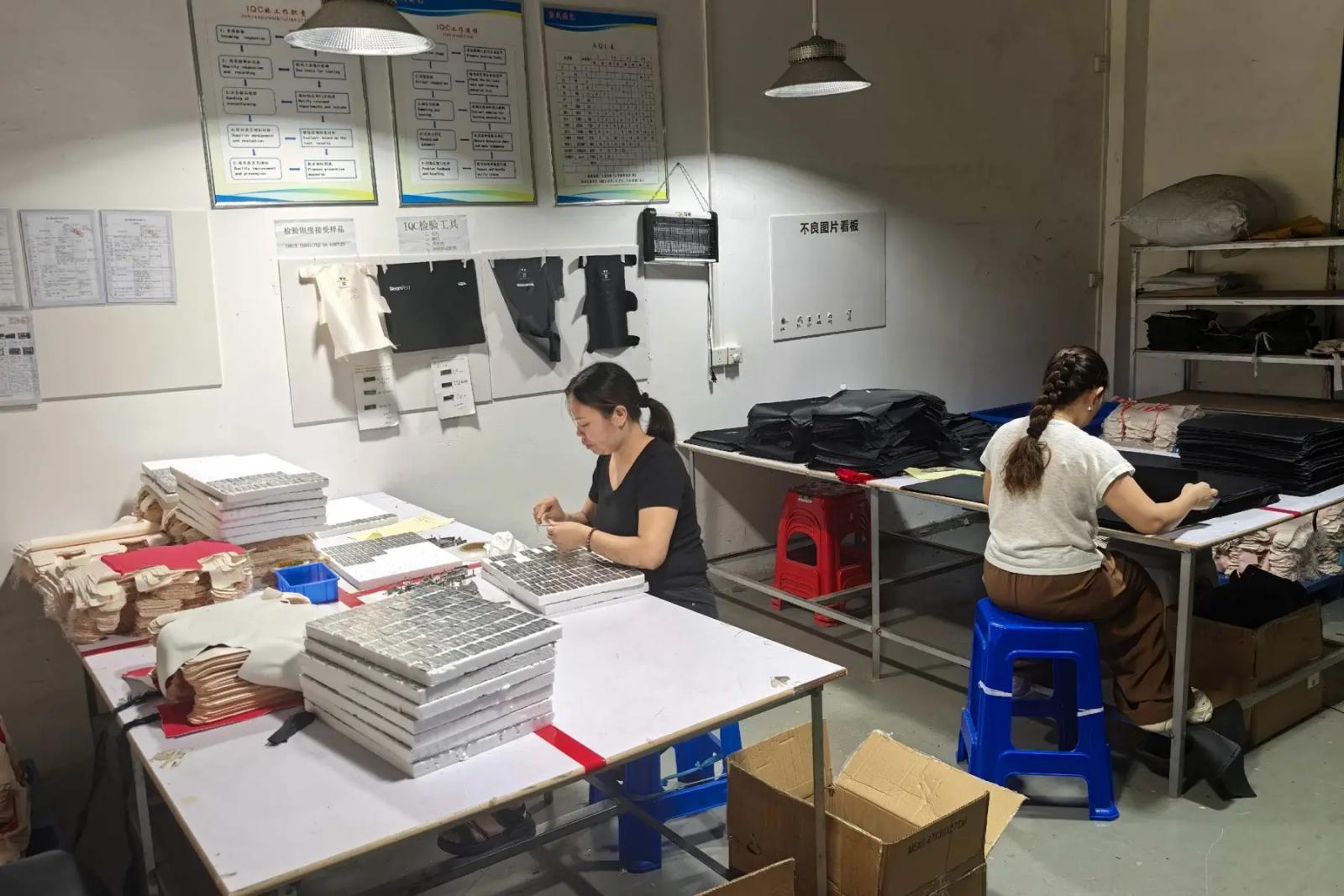
Inspection tools, reference panels, and sample records kept close to the checking table.
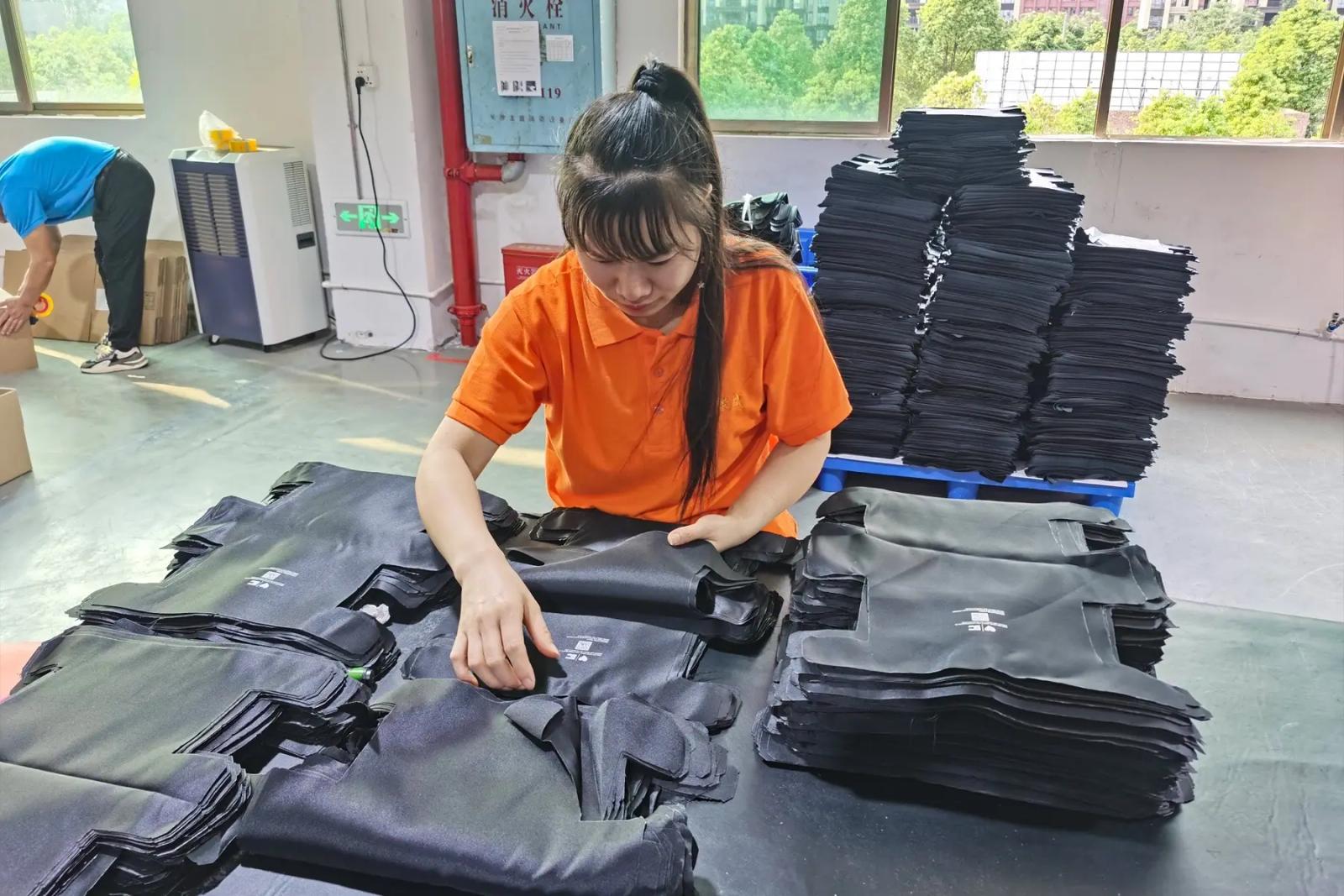
Cut pieces, panels, and semi-finished parts are reviewed before they move into assembly.
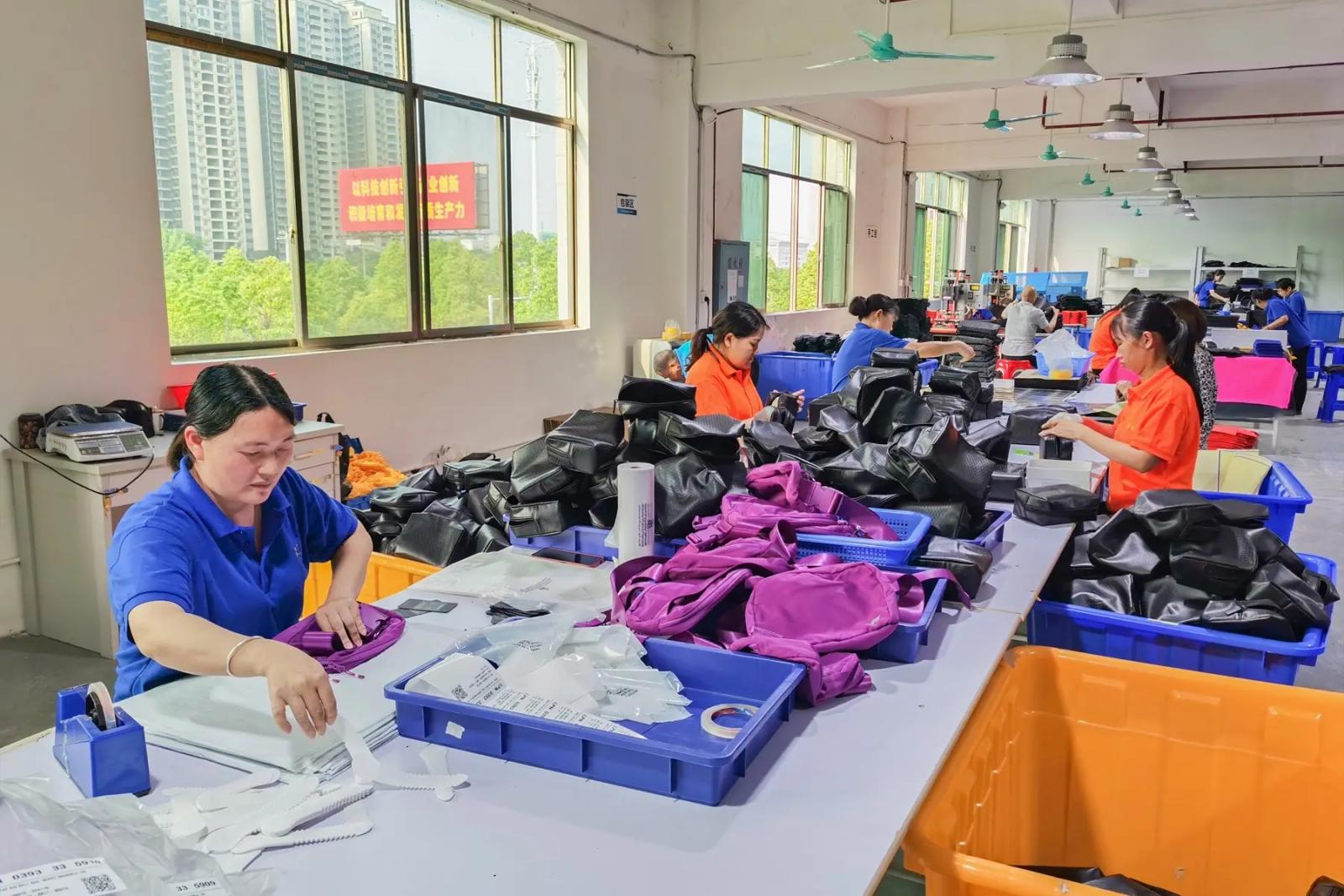
Finished bags are sorted, checked, packed, and labeled before cartons leave the workshop.
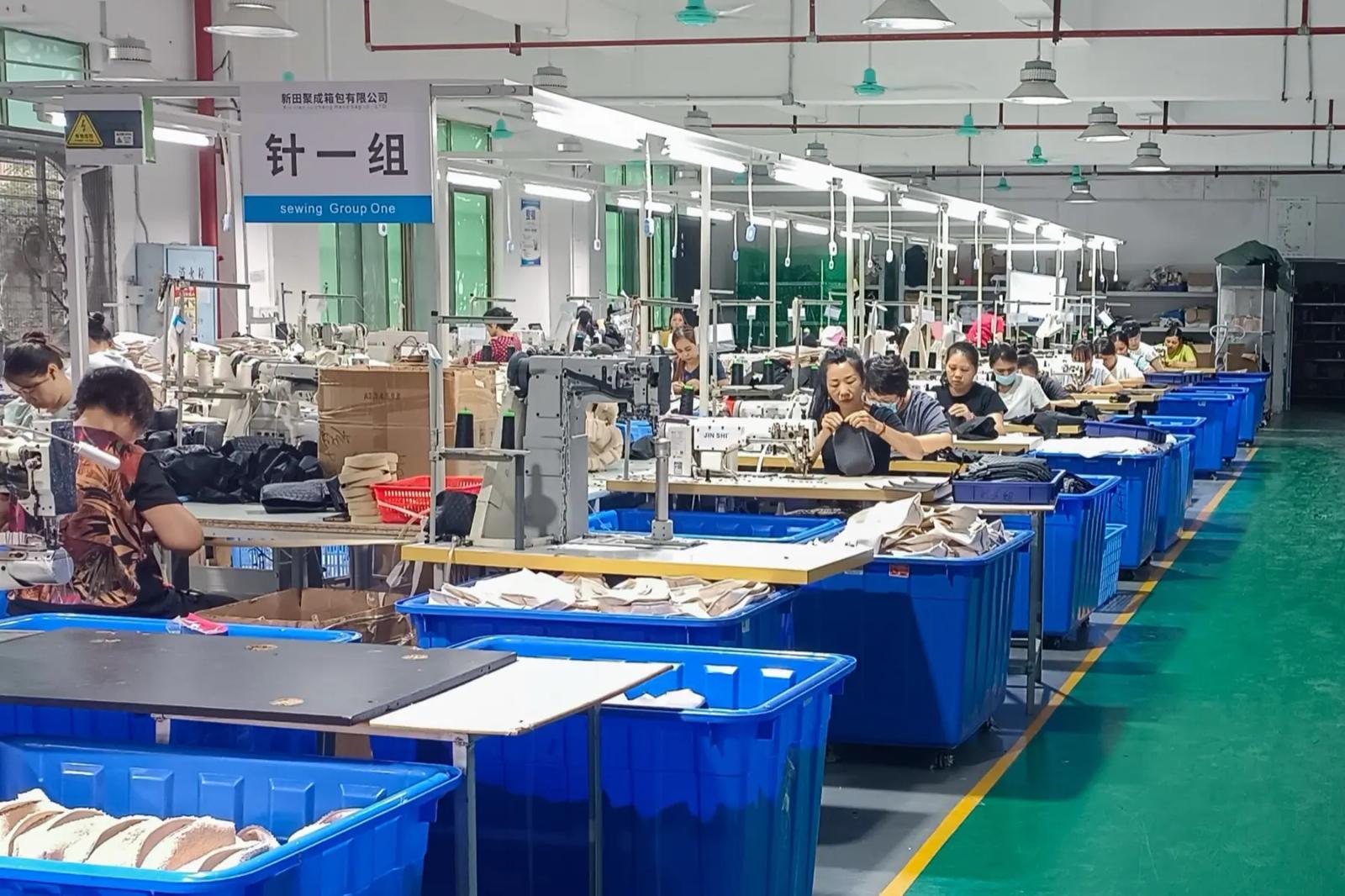
Dimensions, seams, and finishing details are checked against approved references.
Record the order, SKU, factory, line, stage, date, approved standard, quantity produced and checked, measurements, defect type and count, photos, corrective action, reinspection result, inspector, and release decision. Retain the record with the approved sample history.
Quality Control FAQ
The plan should include an approved production standard, incoming-material checks, first-unit and in-line checks, critical measurements, workmanship and function review, final inspection, packing verification, nonconformance closure, and dated evidence.
Not by itself. The buyer still needs a written standard, trained inspectors, defined defect classes and tolerances, traceable records, escalation rules, and verification that reworked goods were checked again.
No. Keep a common framework, then add construction-specific checks for the material, closures, hardware, seams, load points, decoration, labeling, packing, destination market, and buyer requirements.
Useful evidence includes order and SKU identification, inspection date and stage, quantity checked, specification used, results by checkpoint, measurement records, defect photos and counts, corrective action, reinspection result, and release approval.
There is no single required level. Many buyers start final random inspection with ISO 2859-1 or ANSI/ASQ Z1.4 general inspection level II, zero accepted critical defects, AQL 2.5 for major defects, and AQL 4.0 for minor defects, then adjust for product risk, price point, and market. For a lot of 3,201 to 10,000 bags, that plan checks 200 units and accepts up to 10 major and 14 minor defects.
Schedule the final random inspection after production is complete and most of the order, commonly at least 80%, is packed, so samples come from finished cartons and quantity, assortment, packing, and carton marks can be verified before shipment release. In-line checks should start earlier, with the first production units.